












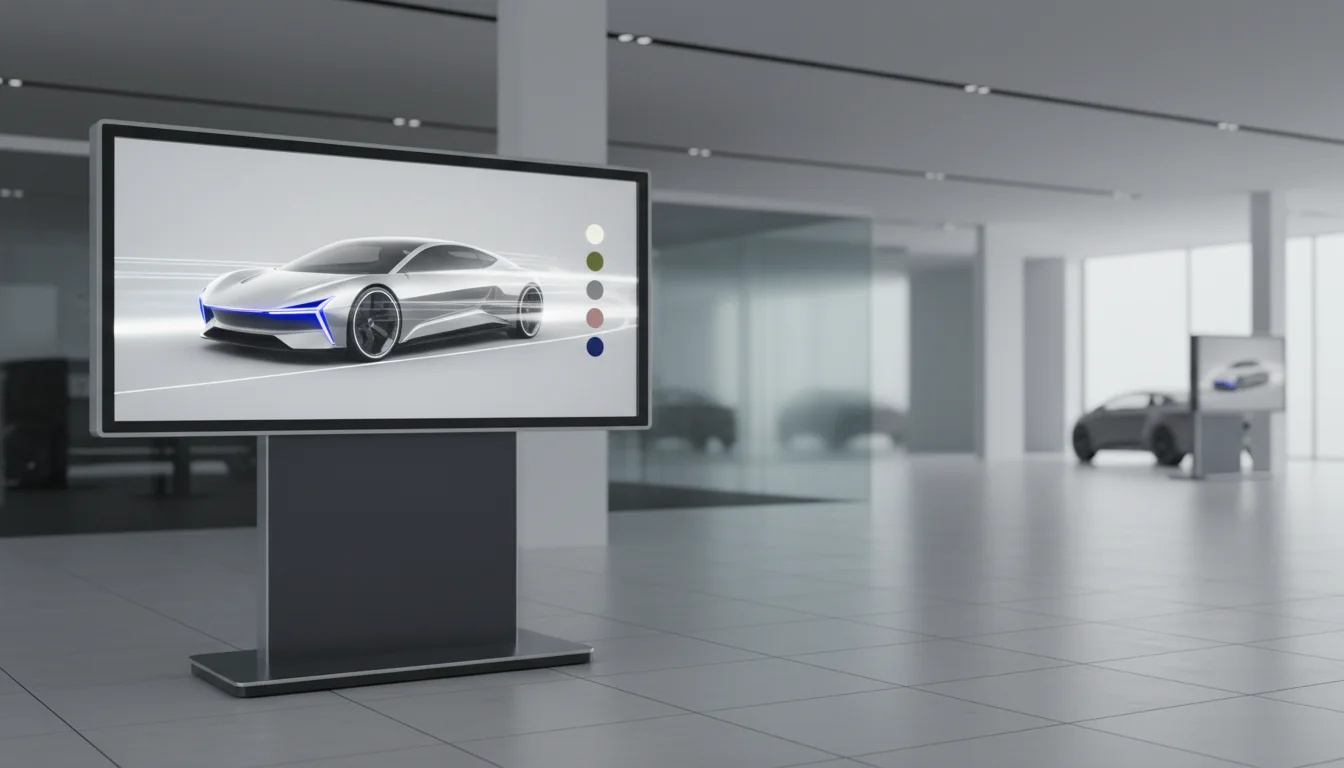
Every configurator makes the same implicit promise: what you see is what you ordered. Keeping that promise is an imagery problem before it is a software problem, because every trim, colour and option combination the configurator sells needs a correct picture, and photography cannot shoot combinatorics. This is how configurator imagery actually gets built.
The combinatorial wall
A modest range with four trims, twelve colours and three wheel options is already 144 exterior combinations per angle. Multiply by eight angles and the shoot list has quietly passed a thousand images for one model. Manufacturers solve this with CGI pipelines; everyone downstream, from leasing platforms to dealer groups, historically solved it by showing the wrong car politely.
Rendering from specification data
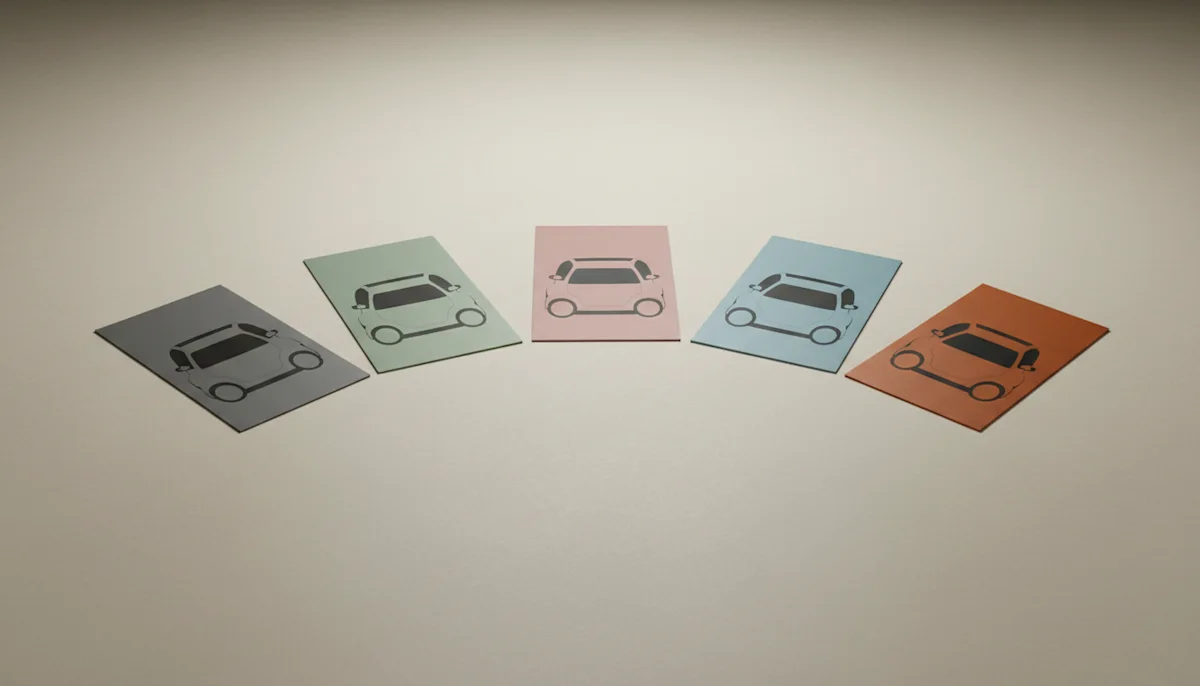
The scalable answer renders each combination on demand from manufacturer data: the trim defines the body and wheels, the colour code defines the paint, and the request defines angle and format. Change the colour parameter and the same studio shot repaints; change the trim and the body follows. That is the machinery behind our colour support, and it is why configurator imagery is a request pattern rather than an asset library.
Sync is the real engineering problem
The hard bug in configurators is drift: the pricing engine knows a new trim exists, the image layer does not, and the customer configures a car whose picture is quietly last year's. Preventing drift is architectural:
- One source of truth for the range, feeding both pricing and imagery
- Stable catalogue IDs stored with each configuration
- Responses that flag fallbacks, so the UI can react instead of lie
- Model year rollovers handled as data changes, not asset projects
Beyond the manufacturer configurator
The pattern extends far past brand sites. Leasing platforms run configurators over their quotable range, subscription apps let members spec their next swap, and brokers walk clients through options in a proposal. Each is the same loop: specification in, exact image out, price alongside. The leasing page shows the fullest version of that loop in production.
A configurator that shows the wrong car is a very expensive form of lying politely.
If you run any configuration flow today, test it adversarially: pick the least popular trim in the least popular colour and see what picture appears. That corner case is where imagery systems tell you the truth about themselves.
Performance keeps the magic alive
Configurator delight dies at the first spinner. Colour switches should feel instantaneous, which means preloading the adjacent options while the customer considers the current one: the palette is known, the trim is fixed, and a handful of prefetched variants make the whole panel feel native. Angle switches follow the same trick. None of this is exotic engineering; it is ordinary image preloading applied to a known option space, and it is the difference between a configurator that feels like a toy and one that feels like a showroom.
Measure it the way customers feel it: time from colour tap to painted car, on a mid range phone, on hotel wifi. Under two hundred milliseconds reads as instant; under half a second reads as fine; anything above starts costing configurations.