












The car business runs on APIs the way it once ran on fax machines: quietly, everywhere, and with nobody quite holding the full map. Anyone building for dealerships, marketplaces, insurers or fleets ends up stitching together half a dozen specialised services. This guide is the map we wished existed, drawn from the integrations we see every week.
The main families
Automotive APIs cluster into a handful of families, and most products need one or two from each. The names differ by market, but the shapes repeat.
| Family | What it answers | Typical consumers |
|---|---|---|
| Vehicle data | What is this car, exactly? | Everyone, as the foundation |
| VIN and plate decoding | Which car is this identifier? | Dealers, insurers, lenders |
| Valuation and pricing | What is it worth today? | Marketplaces, lenders, fleets |
| Imagery | What does it look like? | Every customer facing surface |
| Telematics and connected car | Where is it and how is it driven? | Fleets, insurers, rental |
| Listings and syndication | Where is it for sale? | Marketplaces, dealer tools |
How the families combine
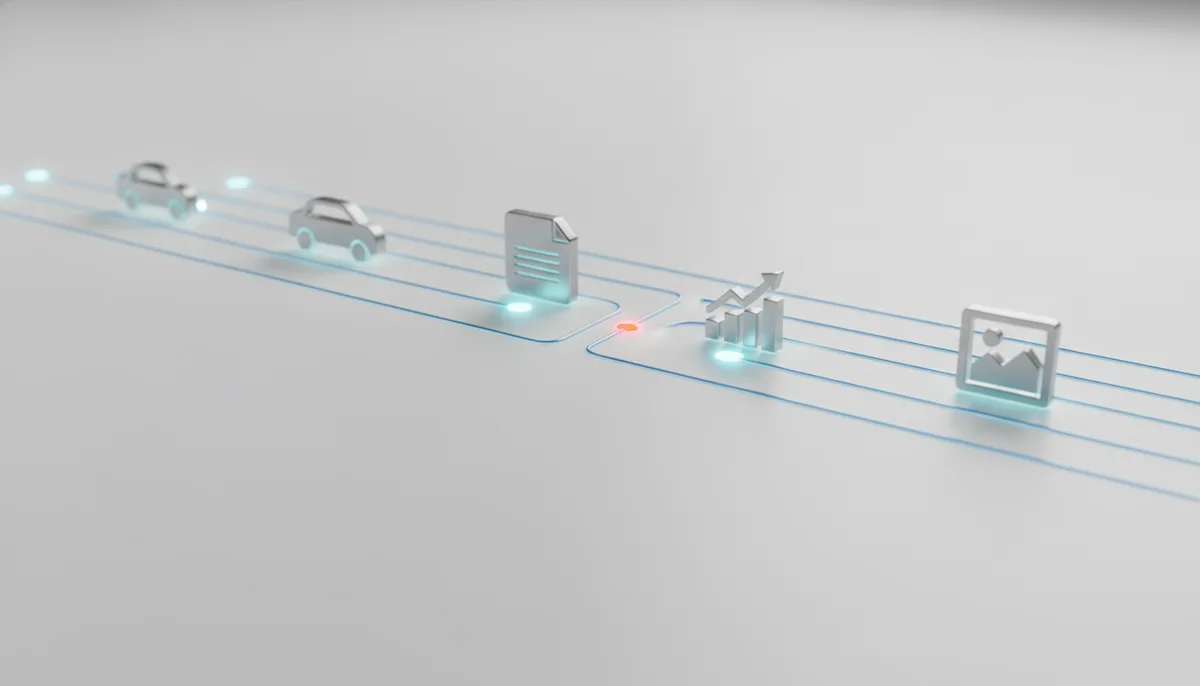
A real product is a chain of these services. A finance calculator decodes a VIN, pulls the specification, prices the risk, and shows the vehicle. A marketplace ingests listings, normalises them against vehicle data, and renders every card with consistent imagery. The chains matter more than the links: the quality of an integration is decided by how cleanly identifiers pass from one service to the next.
- Identifiers first: a system that stores VINs and stable catalogue IDs can add any service later
- Normalise early: map trims against manufacturer data at ingest, not at render time
- Cache deliberately: most automotive data changes slowly, and caching policy is cost policy
- Read the licence: every family has different rules about what you may store and display
Where imagery sits in the stack
Imagery is the family every user sees and the one teams integrate last, usually after living with mismatched photos for years. It slots into the chain wherever a vehicle identifier exists: the same VIN that feeds the valuation feeds the picture. Our vehicle image API is built for exactly that position, resolving identifiers to studio images of the right trim in the right colour.
Choosing services without regret
Three questions sort the field quickly. Does the service resolve the identifiers you actually hold, rather than the ones it wishes you held? Does the licence cover your surfaces, including documents customers keep? And does it fail loudly, telling you when it substituted or guessed? Services that pass all three compose well; services that fail the third poison the chain silently, and you find out from customers.
If you are starting from zero, begin with vehicle data and identifiers, add imagery when the first customer facing surface appears, and treat everything else as demand driven. The API documentation shows how the imagery piece works in detail.
The build or buy line
One last orientation point: almost nothing in this landscape is worth building in house. Vehicle data, decoding, valuation and imagery are all maintenance treadmills wearing product costumes, and every one of them is somebody's entire company. The defensible part of your product is the chain you compose and the experience on top, not the links themselves. Buy the links, own the chain.