











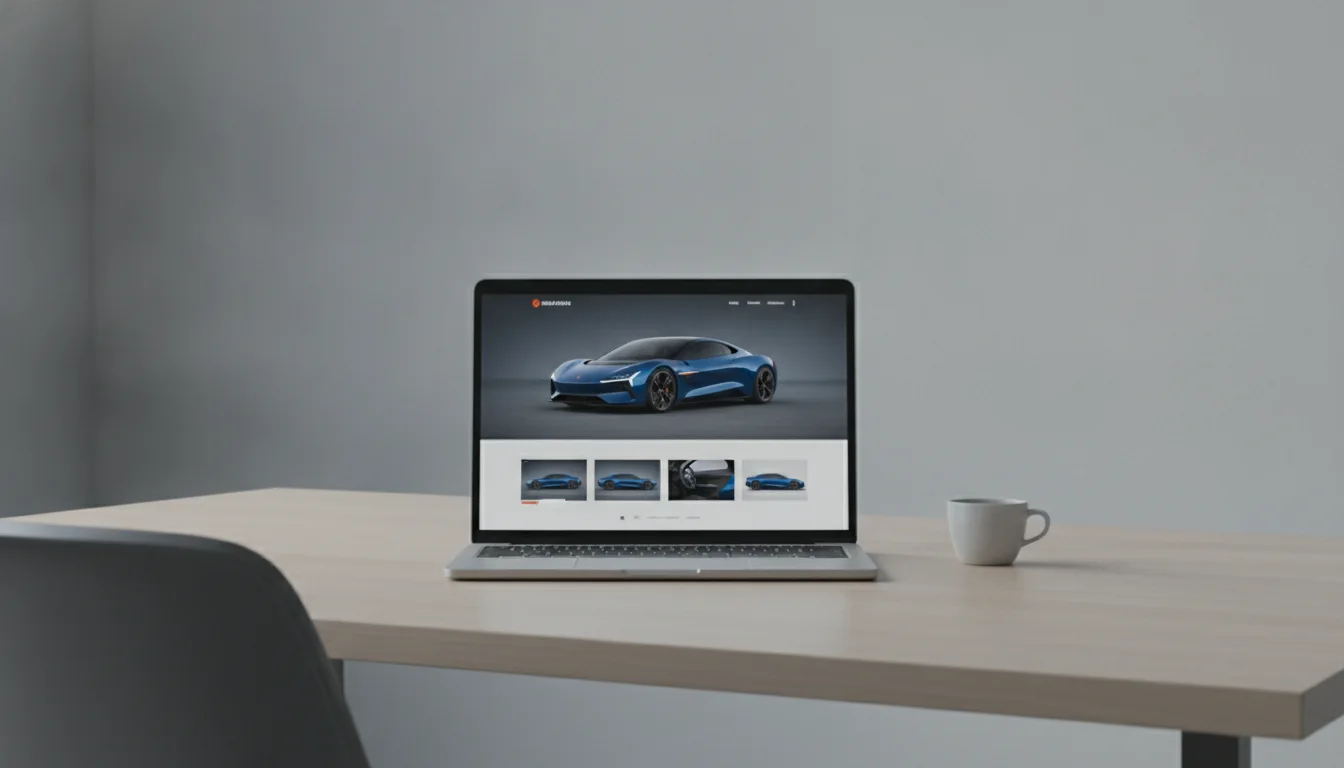
The vehicle detail page is where automotive retail actually happens: a shopper has clicked one specific car and is deciding whether to keep reading or bounce back to the search results. Everything above the fold is negotiable except the image, because the image is what they clicked for. VDP engagement work that ignores the picture layer is optimising the frame around an empty canvas.
The journey starts one page earlier
VDP engagement is usually framed as an on-page problem, but the first battle is on the search results page. In a grid of forty thumbnails, cars with clean, complete, consistent images collect the clicks, and cars photographed in the rain, or represented by a lookalike press shot, quietly do not. Whatever your SRP-to-VDP click-through is today, the image layer is part of that number.
Three things the image layer controls on the page
The first impression is the hero angle
A front three-quarter studio shot of the exact trim in the exact colour answers the shopper's first question (is this the car I think it is?) before a single line of copy. A wrong-trim picture answers it wrongly, and the shopper who notices the wrong wheels stops trusting the rest of the page, including the price.
A complete gallery keeps them on the page
Shoppers who cannot find the rear view or the interior leave to find them elsewhere, often on a competitor's listing of a similar car. Serving all eight exterior angles plus interior for every vehicle, not just the ones a photographer reached, removes that exit.

Colour is a decision, not a swatch
A colour picker that repaints the actual car, rather than a row of paint chips next to a silver press photo, turns a static page into a small configurator. That is a request parameter, not a feature project: see every paint colour.
What to measure
- SRP→VDP click-through, segmented by image completeness of the listing
- VDP bounce rate for listings with a full angle set vs partial
- Gallery interaction depth: how many angles a shopper actually opens
- Lead form starts per VDP session, before and after standardising imagery
Teams that standardise the image layer rarely report it as a design improvement. They report it as a funnel improvement, because that is where it shows up.
The two objections that always come up
The first objection is that studio images hide condition on used cars. True, and it argues for layering rather than replacing. The rendered set carries the consistent presentation layer, and the seller photographs document the actual vehicle underneath it. Shoppers get both answers: what the car is, and what this specific example looks like. Pages that mix the two jobs into one messy gallery answer neither well.
The second objection is speed, and it points the wrong way. A photo pipeline takes days per car and a render resolves in milliseconds from a CDN, so the image layer stops being the reason a listing waits. The cars that used to sit online pictureless while the photographer worked through the backlog are exactly the cars whose VDP engagement was zero.
The integration mechanics (resolve by VIN at intake, embed a CDN URL, cache in your stack) are the same as everywhere else; vehicle images for dealer groups walks through the retail case end to end.