











Search for vehicle image APIs and two entirely different products answer. One kind accepts the photos you have: it stores dealer uploads, strips backgrounds, crops, compresses and serves them. The other kind generates the image from vehicle data: no photo exists until the request arrives. Teams regularly evaluate one while needing the other, so the distinction deserves a page of its own.
What upload pipelines actually solve
An upload API is infrastructure for photographs. It answers questions like where do seller photos live, how do they get cleaned and resized, and how do they reach the CDN. If your product depends on documenting specific physical cars, their dents and their odometers, this pipeline is unavoidable, and its quality shows in processing speed and edge case handling.

What delivery APIs solve instead
A delivery API like ours answers a different question: what does this specification look like? It renders the exact trim in the exact colour from manufacturer data, identically framed for every vehicle, available before any physical car is photographed or even built. It cannot show a scratch, and it never shows the wrong wheels.
| Upload pipeline | Delivery API | |
|---|---|---|
| Source | Your photographs | Manufacturer data |
| Shows condition | Yes | No, by design |
| Consistency | As good as the photos | Identical by construction |
| Coverage | What was photographed | The whole catalogue |
| Available | After the shoot | Before the car exists |
The architecture most platforms land on
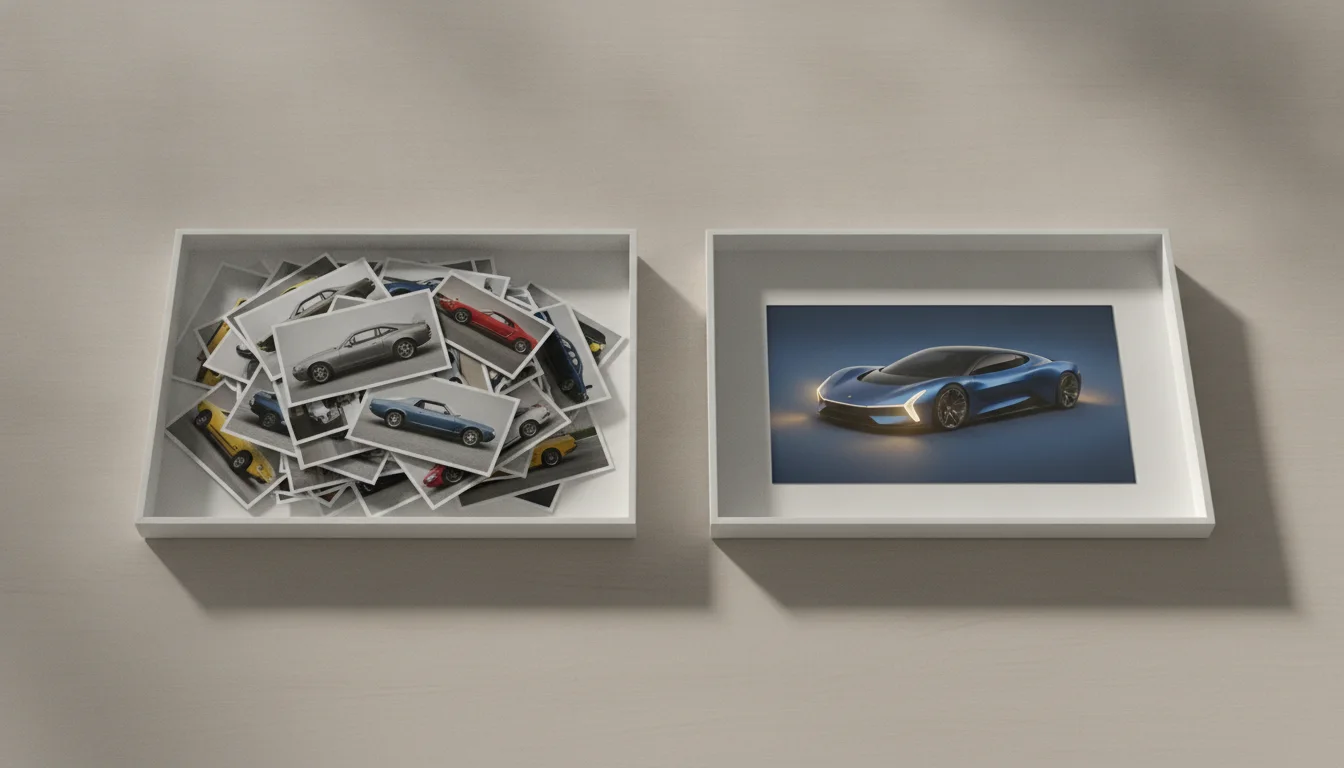
The mature answer is layered. The delivery API provides the reference layer: consistent hero images, complete angle sets, correct trims, for every vehicle from the first second. The upload pipeline carries the evidence layer: condition photos, damage documentation, the individual car. Listings, claims files and auction lots all read better when the two layers are visibly distinct, because each one answers the question it is actually good at.
- Reference layer from data: instant, uniform, complete
- Evidence layer from photos: specific, honest, conditional
- Clear visual separation, so neither pretends to be the other
Integration questions worth asking early
For upload pipelines: what happens to a five megabyte phone photo at scale, and who pays for the storage decade. For delivery APIs: does the trim resolve correctly, and does the licence cover your surfaces. For both: how do they meet in your data model, which usually means one vehicle record holding both a catalogue reference and a media list. Get that record shape right and the two products never fight.
If you arrived here searching for upload integration answers but your actual pain is inconsistent listing imagery, start with the marketplace page instead. It is the more common mix up, and the cheaper one to fix.
Migration between the two
Products often start upload only and add the delivery layer later, and the joint is painless if the vehicle record was designed with both in mind. Add the catalogue reference beside the media list, backfill by resolving stored VINs, and switch surfaces one at a time. The listings grid usually converts first, because that is where upload chaos hurts most visibly.
Naming matters too. Inside your team, call the two layers reference and evidence rather than renders and photos, because the second framing invites the wrong debate. Nobody argues about whether evidence should replace reference; everyone argues about whether renders should replace photos.