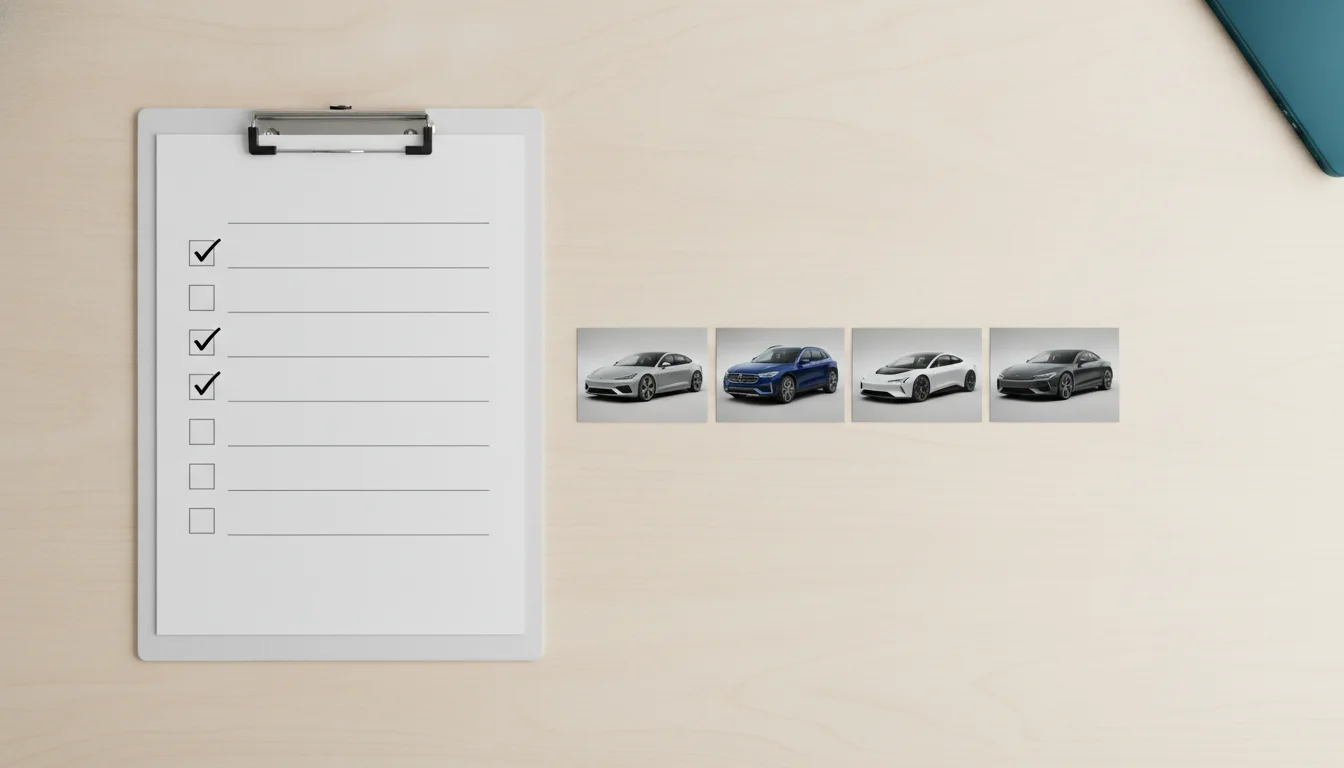
Selling cars online is a sequence of images with a transaction attached. Buyers meet the car as a thumbnail, judge it as a gallery, and commit to it as a picture on a document, and every step either builds confidence or leaks it. This checklist walks the funnel in order, and it applies whether you sell three cars or thirty thousand.
The search card
- Front three quarter angle, every listing, no exceptions
- Identical framing and background across the whole grid
- Sized for the card, not uploaded at camera resolution
- No watermarks fighting the platform's own brand

The card's job is to make comparison easy and the platform trustworthy. A uniform grid does both before a single price is read; a jumble does the opposite and no ranking algorithm compensates.
The listing gallery
- The complete angle set: eight exteriors plus dashboard and console
- Consistent order, opening with the hero angle
- For used cars, a visibly separate layer of condition photos
- Correct trim and colour, because buyers check the wheels
Galleries fail by omission more than by quality: the missing rear view sends buyers to a competitor's tab to find one. The angle guide covers what each view contributes, and rendering guarantees the set exists for every vehicle, including the ones no photographer reached.
The decision surfaces
Past the gallery, images keep selling. The finance calculator that shows the car keeps the payment attached to the object of desire. The comparison view in identical framing lets the buyer shortlist honestly. The reservation confirmation with the exact vehicle turns a form submission into a felt commitment. Each surface is one image request, and together they carry the emotional thread from browsing to buying.
The paperwork
Offers, contracts and handover documents that show the vehicle close the loop: what was promised is what is printed. For anything customer kept, cache the images with the record so documents regenerate faithfully years later, and make sure your licence covers exactly that use.
Scoring yourself honestly
Run ten of your own listings against the lists above and count misses. Under five, polish; over fifteen, the problem is structural, and structural problems want systems rather than effort. Consistent imagery from data is precisely such a system, and it makes every checkbox above automatic rather than aspirational.
Buyers cannot read your inventory database. Pictures are the only interface they get.
For the platform scale version of this playbook, the marketplace page and the dealer group page carry the operational detail.
One more habit separates the disciplined from the lucky: assign every checkbox an owner. Consistency fails not because nobody cares but because everybody assumes the feed, the photographer or the platform handles it. A one line owner column on this checklist survives reorganisations that sink entire style guides.
The mobile reality check
Most of your buyers will run this entire funnel on a phone, often on mediocre bandwidth, and every checkbox above gets harder there. Cards must load inside a scroll flick, galleries must swipe without jank, and the finance calculator's image cannot push the payment button below the fold. Test the funnel on a mid range device over cellular before declaring any checkbox done, because the desktop version passing means very little to the majority of your traffic.