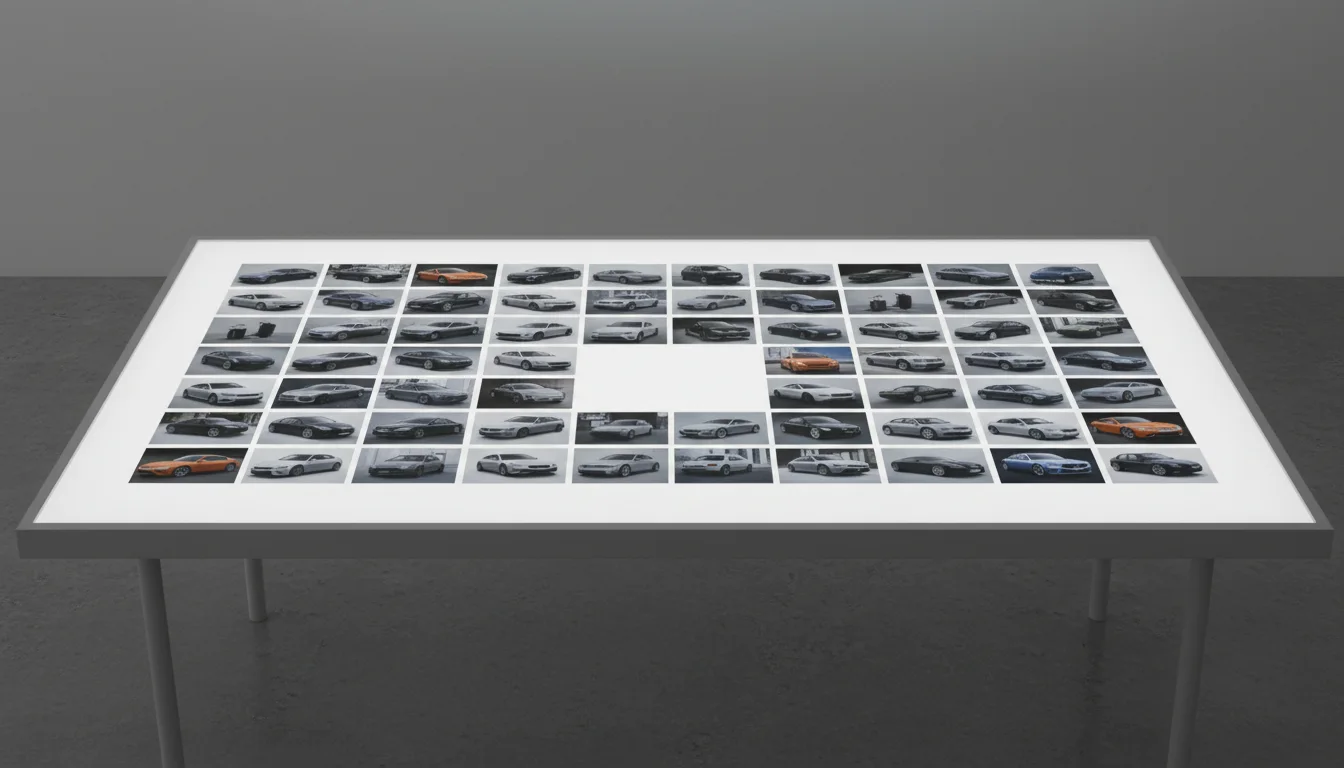
Sooner or later every team building anything automotive types stock car photos into a search bar. The libraries deliver beautifully lit vehicles by the thousand, and almost never the one you actually need: your market's trim, this year's facelift, the colour your customer configured. Stock photography of cars is a real tool with a narrow honest use, and this guide draws the line.
What stock is genuinely good for
Stock earns its keep when the car is scenery rather than subject. A blog header about commuting, a mood image of a road trip, an office wall print: any context where no specific vehicle is being claimed. The photography is professional, the price is reasonable, and nobody is misled, because the image decorates rather than describes.

Where stock quietly goes wrong
The trouble starts the moment a stock photo stands in for a specific vehicle. A listing, a quote, a configurator or a review illustrated with a similar car makes a claim it cannot keep, and customers notice the wrong wheels faster than any disclaimer. Three failure modes repeat everywhere:
- The wrong specification: launch trims and foreign market variants posing as your inventory
- The licence gap: editorial collections used commercially, with agencies that audit
- The consistency collapse: five stock sources producing five visual languages on one page
Reading stock licences without a law degree
Two distinctions cover most of the risk. Editorial versus commercial: editorial images document news and may not sell products, which is exactly what a listing does. Royalty free versus rights managed: royalty free means pay once and use within the terms, not free of rights. If an image of a branded vehicle will help sell something, read the commercial terms twice and keep the receipt, because automotive brands police their trade dress.
The alternative for specific vehicles
When the car is the subject, the honest options are photographing the actual vehicle or rendering its exact specification. Photography wins for condition and individuality; rendering wins for coverage, consistency and the simple fact that the trim and colour are correct by construction. Most platforms end up pairing the two and dropping stock for vehicle display entirely, keeping it for the scenery it was always meant to be.
| Need | Right tool |
|---|---|
| Mood and lifestyle context | Stock photography |
| A specific listing or quote | Rendered exact vehicle |
| Condition of one physical car | Your own photos |
| Campaign visuals in exact colours | Rendered cutouts composited |
If your current site mixes all four, the audit is quick: open ten vehicle pages and ask of every image, is this the car we are claiming it is? The pages that fail explain themselves. The buyer's guide to automotive imagery covers the full sourcing landscape if you want the map.
And if the reason you reached for stock was simply that no better image existed for the long tail of your catalogue, that problem has a cleaner answer than a subscription: coverage that renders every model in the range, on demand, in one look.