











Automotive imagery is the picture layer of the car business: every image of a vehicle that appears on a listing, a configurator, a quote, a policy document, an auction catalogue or a rental booking screen. The term sounds like a solved problem. It is not. Almost every company that displays cars at scale spends real money and real engineering time on the question of where those pictures come from, and most of them are unhappy with their current answer.
This guide covers the three places vehicle images actually come from, what each one is good for, and what to check before you commit a platform to any of them.
The three sources of vehicle images
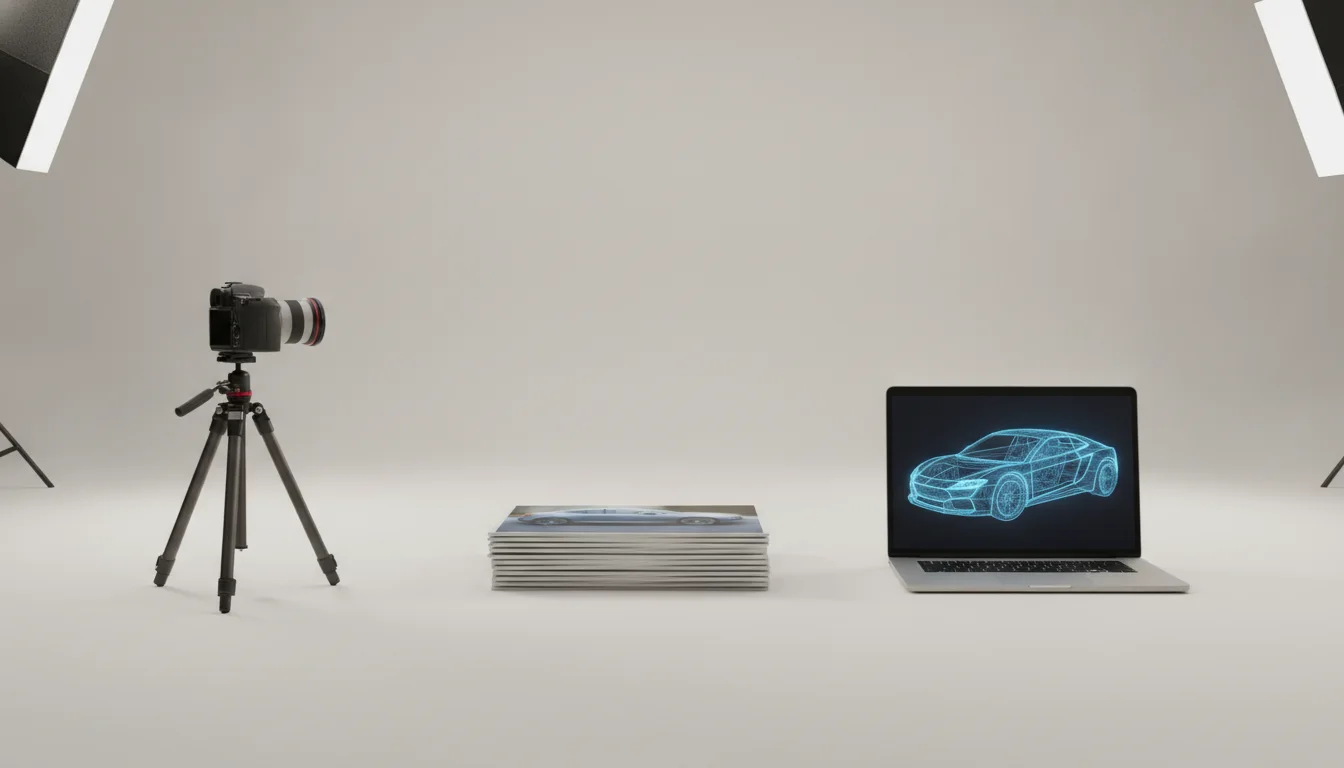
Every vehicle image on the internet traces back to one of three sources: someone photographed that specific car, someone downloaded a manufacturer press photo, or the image was rendered from vehicle data. Everything else (stock libraries, dealer feeds, scraped collections) is a repackaging of one of the three.
Photography
Photographing the actual car is the gold standard for used vehicles, because the picture shows the car being sold: its condition, its wheels, the dent in the door. It is also the most expensive option per image, it queues behind a photographer's calendar, and it produces a catalogue where no two cars look alike unless the operation is unusually disciplined.
Manufacturer press kits
OEM press photos are free and beautiful, and they are made for magazines, not catalogues. Coverage is limited to the launch trims in the launch colours, the licence rarely covers commercial use in quotes or listings, and every brand shoots against a different background with different lighting. A platform assembled from press kits looks assembled.
Rendered catalogues
The third source generates images from licensed manufacturer vehicle data: the trim's body style, wheels and equipment, painted in factory colours, framed by the same virtual camera for every car. That is what an API like ours serves. Coverage stops depending on what was photographed, every image matches every other image, and the licence is uniform because there is exactly one rights holder. The trade-off is honesty in the other direction: a render shows the vehicle as specified, not the individual car's condition. That is exactly what you want in a quote or a new-car listing, and not what you want for a scratched auction lot.
How the three compare
| Photography | Press kits | Rendered catalogue | |
|---|---|---|---|
| Coverage | What you shoot | Launch trims only | Full range, all trims |
| Consistency | Varies by operation | Varies by brand | Identical by design |
| Trim & colour accuracy | Exact for that car | Launch spec only | Mapped to manufacturer data |
| Licence | Yours | Editorial, mostly | One uniform commercial licence |
| Cost shape | Per car, forever | Free, then legal risk | Per request or per plan |
Who uses automotive imagery, and for what
- Dealer groups: listing cars before the photographer gets to them, or instead of one
- Marketplaces: one consistent look across thousands of sellers
- Leasing and fleet: configurators, driver choice lists and policy documents
- Insurers and lenders: quotes, policies and claim references, resolved by VIN or plate
- Rental and subscription: fleet pages where the class picture matches the car
- Media and marketing: campaign visuals in exact trims and colours
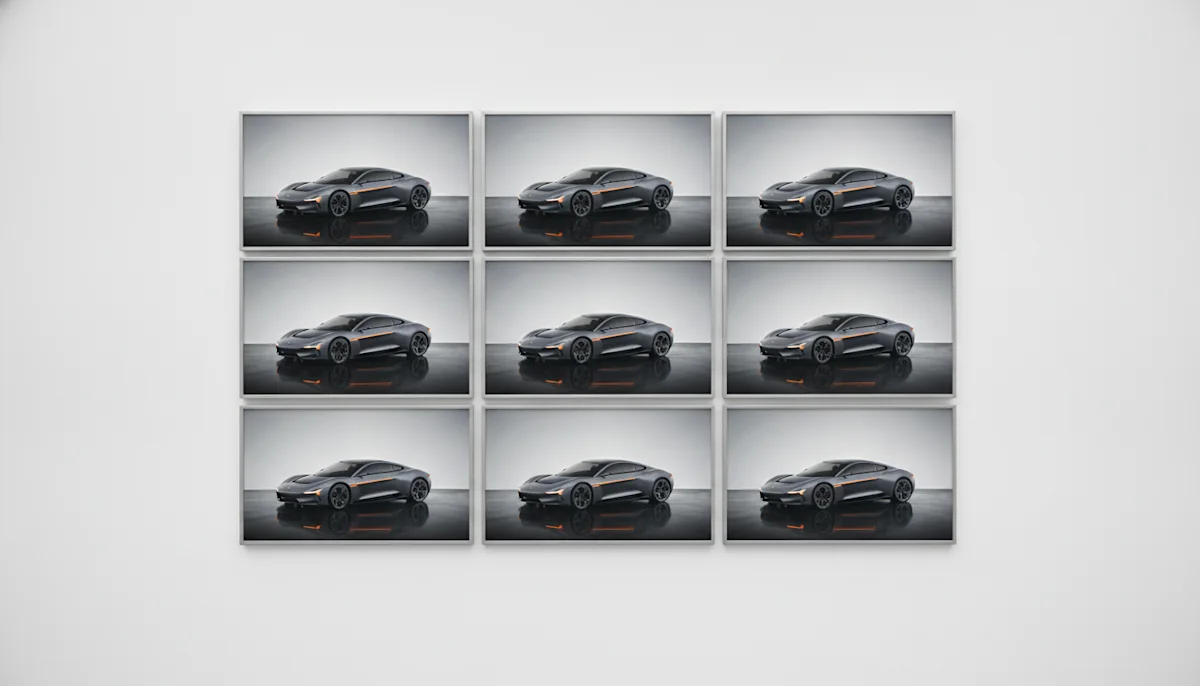
The pattern across all of them: the image is resolved from an identifier the system already holds, such as a VIN, a plate or a make-model-trim record, rather than being found, named and uploaded by a person. See vehicle lookup by VIN, plate or search for how that works in practice.
What to evaluate before you commit
Whichever source you choose, four questions decide whether it holds up at scale:
- Coverage: can it produce an image for the whole range you list, including the long tail, or only for the popular cars?
- Accuracy: is the picture right at trim level, meaning wheels, body style and colour, or only at model level?
- Licence: does the rights situation cover your actual use, in writing, including documents customers keep?
- Delivery: does it arrive as an API and a CDN URL your stack can embed, or as a folder of files someone has to manage?
The test is always the same: take twenty vehicles from your own records, resolve them through the source you are evaluating, and count how many come back as the right car.
If the answer to the coverage question matters to you, start with full make and model coverage; if accuracy is the pain, trim and colour accuracy goes through exactly what that requires.