











Every few years the 360 spin gets rediscovered as the future of car retail, and it demos wonderfully: drag the car, watch it turn. The question a platform has to answer is not whether spins are impressive (they are) but whether they are worth what they cost, for every car, against the alternative. We should say upfront: we serve static angles, not spins, so read this knowing where we stand. The argument is still worth making on its merits.
What a spin actually costs
- Capture: a turntable, a rig or a walk-around app session per individual car
- Time: minutes to an hour per vehicle, which becomes a queue at fleet scale
- Consistency: rigs drift, lighting varies, and phone-app spins vary wildly by operator
- Delivery: a spin player is heavier than an image tag, and it fights mobile bandwidth
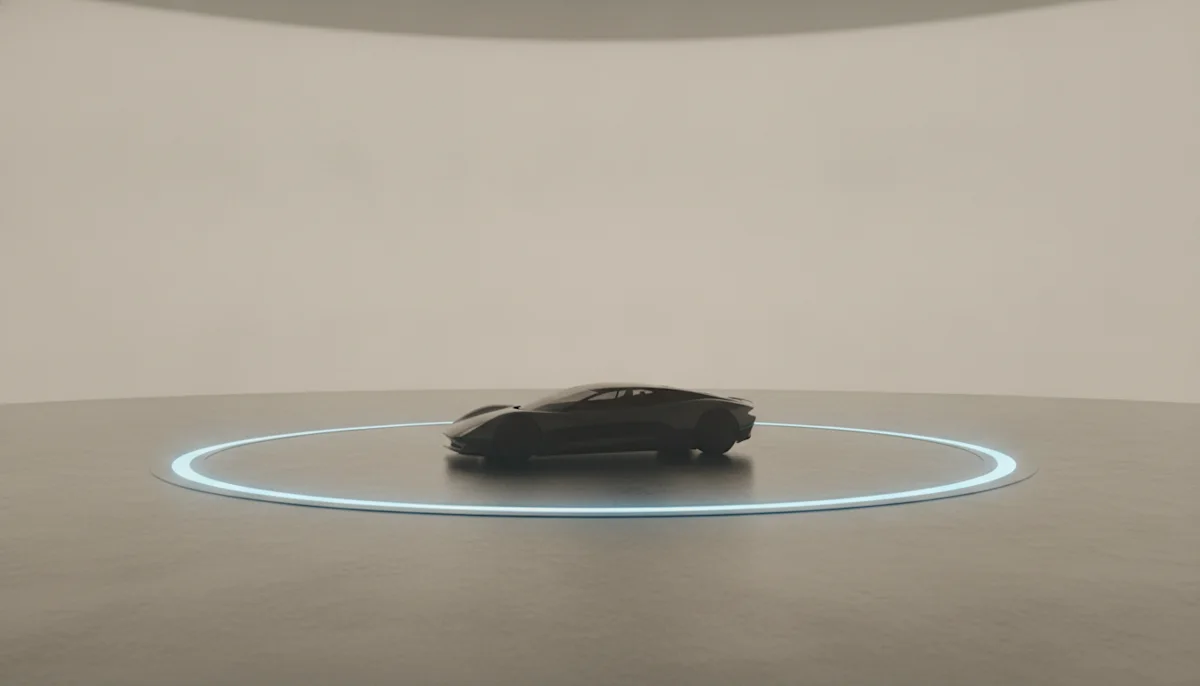
None of this is prohibitive for a flagship such as a certified pre-owned hero car or a halo model on a brand site. All of it is prohibitive for the long tail, which is why platforms that adopt spins almost always adopt them for a fraction of inventory and leave the rest inconsistent. The result is a two-class catalogue, which is its own quality problem.
What shoppers actually need
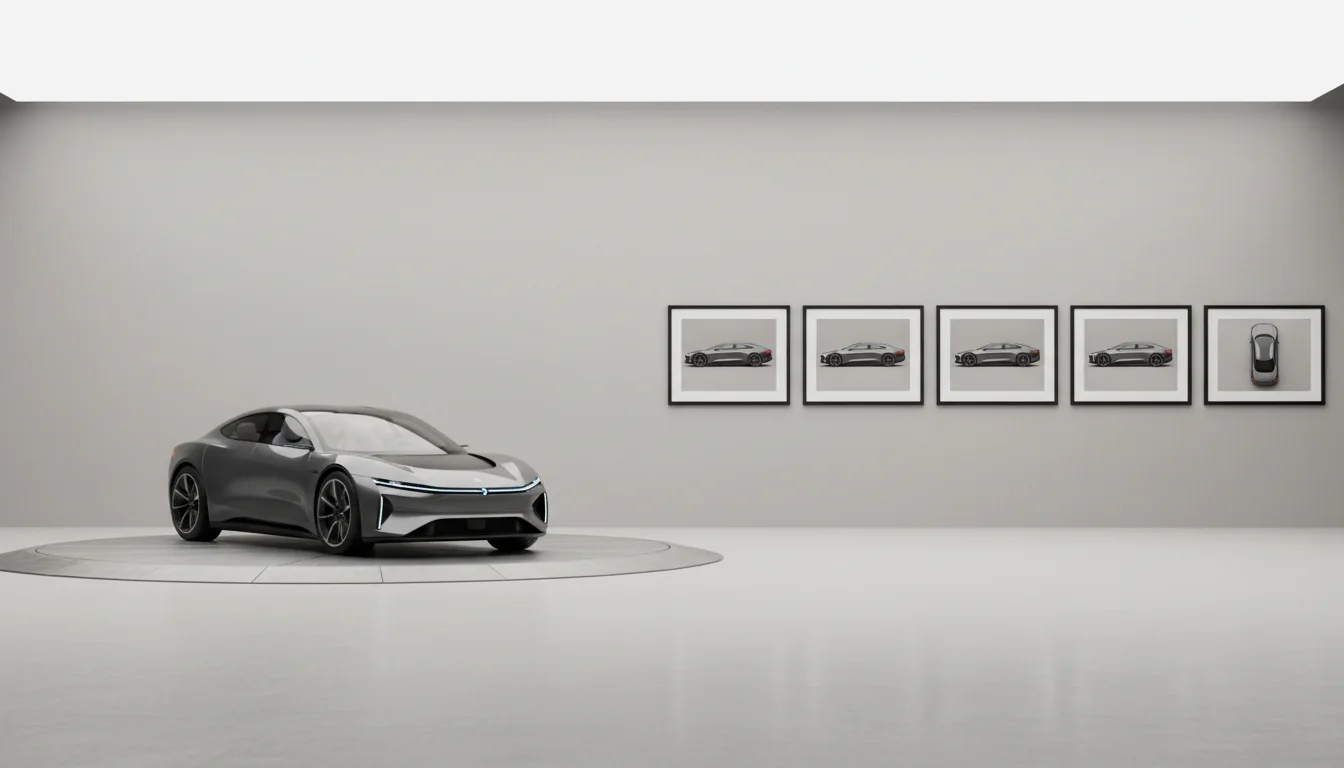
The spin answers one question: what does this car look like from the angle between the angles? The honest observation from watching gallery analytics across the industry is that shoppers use a handful of views to decide: front three-quarter, side, rear three-quarter, interior. They flip between discrete images faster than they drag a spin, and they compare cars by flipping, which spins are terrible at, because no two spins pause at the same frame.
The comparison that matters
| 360 spin | Complete static set | |
|---|---|---|
| Coverage | The cars you capture | Every car in the catalogue |
| Consistency | Per rig, per operator | Identical by construction |
| Mobile weight | Player + frames | One image tag per view |
| Comparability | Poor between cars | Same angle, every car |
| Cost shape | Per car, physical | Per request, marginal |
When the spin earns its keep
Genuine cases: a single high-value vehicle where dwell time is the goal rather than comparison; condition documentation at auction, where the spin substitutes for an inspection walk-around; and brand showcases where the budget is a rounding error. In each, the spin is doing something static images cannot. On a listings grid of four hundred cars, it is doing something expensive that shoppers do not use.
The hybrid that actually ships
The pragmatic answer for most platforms is not either-or. Run the complete static set as the baseline for every vehicle, because that is the layer that has to be universal, comparable and cheap. Add spins selectively where they demonstrably earn attention: the certified programme, the flagship configurator, the halo launch. The baseline guarantees no listing is ever the poorly dressed one, and the spins stay a deliberate highlight instead of an inconsistency.
What to avoid is the inverse, spins for the lucky third of inventory and mismatched photos for the rest. That spends the most money on the fewest cars and makes the gap between the two classes the most visible thing on the page.
If the goal is a catalogue where every car carries the full set of decision angles in one consistent look, that is exactly the problem multiple angles solves, for the whole range, not the front row.