












Every direct insurer knows the shape of its quote funnel: a cliff. Aldertal Insurance, a mid size motor insurer in Cologne, watched prospects arrive from comparison portals, meet a twelve question form, and leave before anything on the screen acknowledged what they were insuring. The car, the entire subject of the conversation, appeared nowhere until the very end, as a line of text.
Twelve questions before anything looked back
The old funnel followed the logic of the policy system rather than the person filling it in. Vehicle data came from dropdown cascades, the make and model resolved on page three, and the first confirmation that Aldertal understood which car was being insured arrived in the summary PDF. By then, most of the traffic had gone.
The plate goes first now
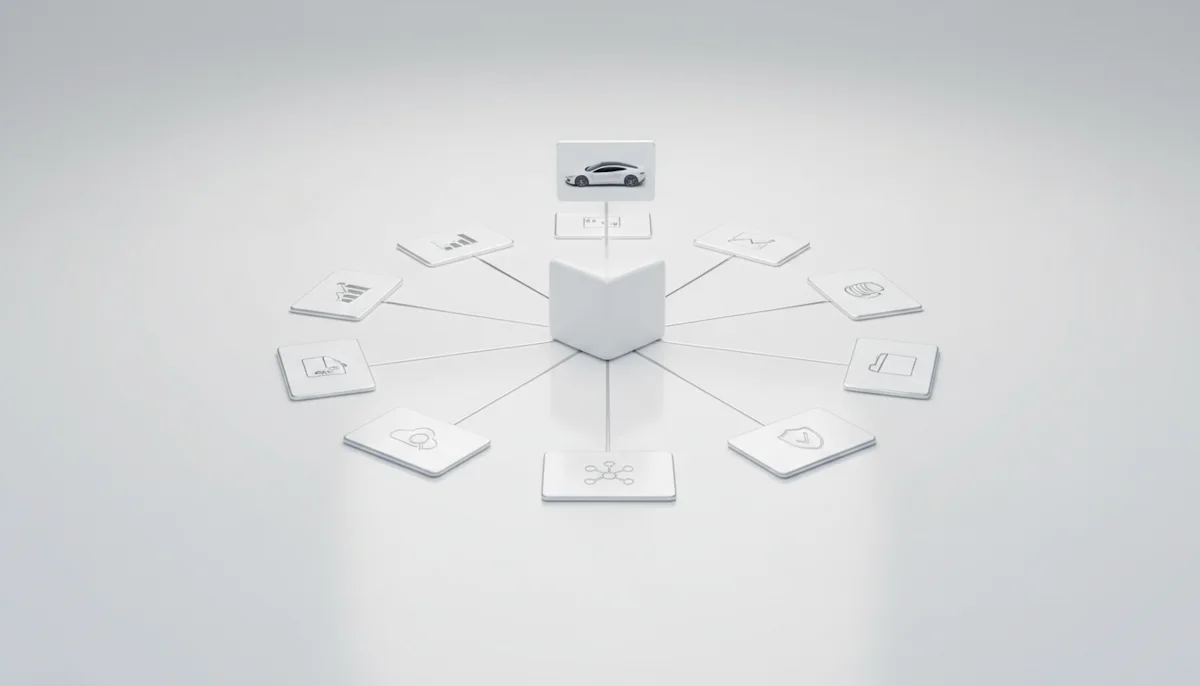
The rebuilt flow opens with a single field: the licence plate. While the prospect is still typing their address, the plate has already resolved through the Vehicle Imagery API, and their car stands at the top of the page, right trim, right colour, from the front left. The psychological shift is simple and measurable. A form about a car feels like paperwork; a page showing your car feels like an answer being prepared. Quote completion rose 14 percent in the first quarter after the switch, and the gain has held.
- One field to start: the plate, which every owner knows by heart
- Vehicle resolved and displayed while the rest of the form is still being typed
- Right trim and factory colour, no lookalike press photos
- The same image carried through to the summary and the policy schedule
The policy carries the car
The image resolved at quote time follows the contract through its life. The policy schedule shows the insured vehicle, renewal letters read as a continuation rather than a mailshot, and a mid term vehicle change updates the picture along with the record. Aldertal caches the document images in its own archive, so a schedule regenerated years later does not depend on a live call.
Claims got the reference layer
The claims team was the quiet second winner. Handlers now open every file with an undamaged studio reference of the insured vehicle beside the photographs from the scene, in the angle the damage demands. Comparisons that used to rely on memory and model knowledge now happen between two images on one screen, and the difference shows in how quickly files move.
What legal liked
The rebuild also closed a file nobody had wanted to open: image provenance. The old funnel's press photos had accumulated over years, with licences nobody could produce on request. The rendered catalogue replaced them with a single rights holder and a licence written for quotes, policies and claim files, which turned a recurring compliance question into a signed answer.
The quote used to feel like a form about a car. Now it feels like an answer about your car, and that difference shows up in completion every single week.